Introducing the 86" Hololuminescent™ Display — Pre-Orders Open Today
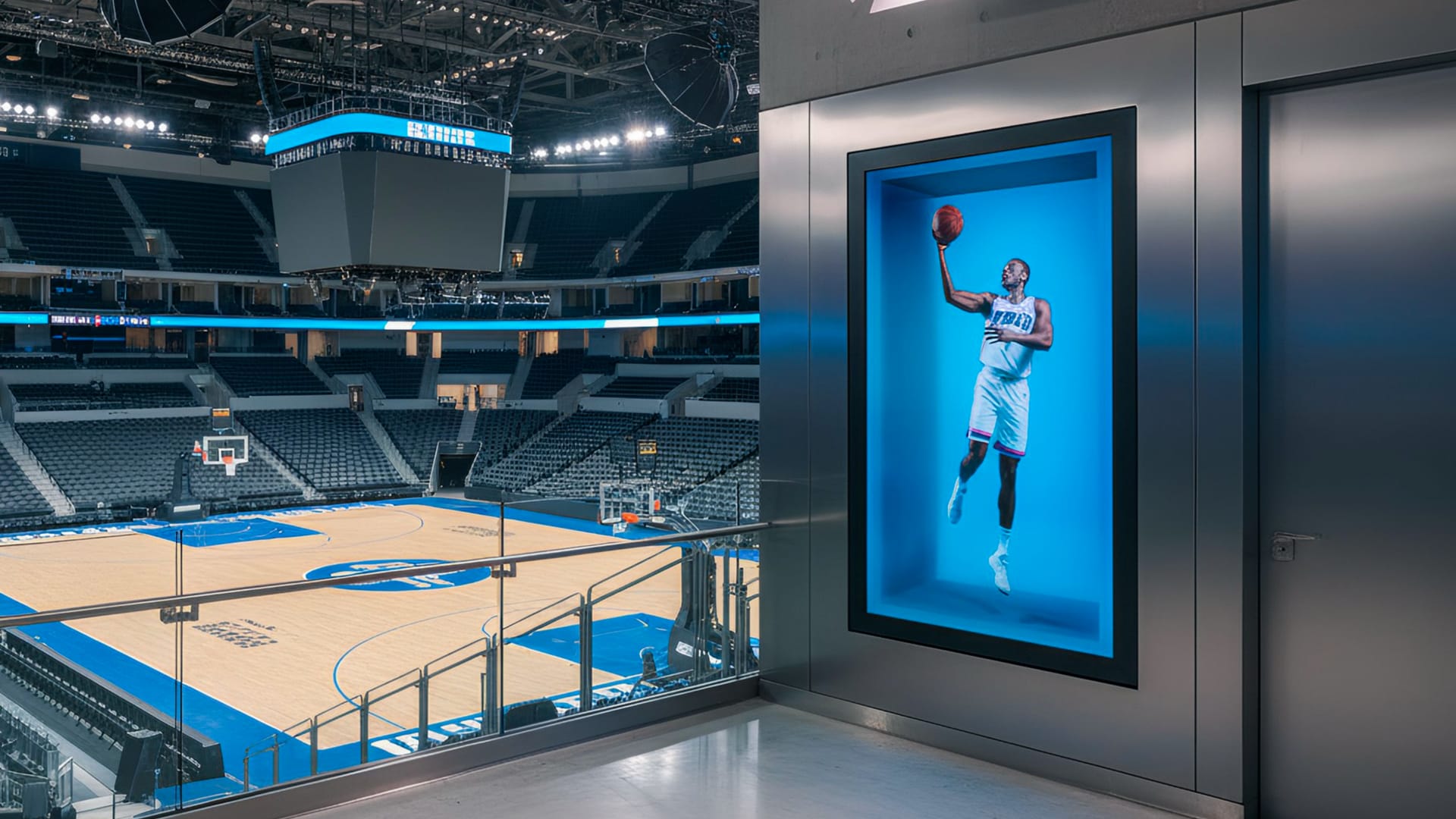
The 86" Hololuminescent Display is the world’s first razor-thin, human-scale holographic display purpose-built for digital signage. At just 2 inches thick, it installs like a standard 2D display — but produces life-size holographic imagery with approximately two feet of perceived depth.

If you’ve ever tried to bring holograms into a real-world environment, you’ve probably run into one of these constraints:
- Traditional “hologram boxes” weigh 400–500 pounds, require dedicated platforms, and take up a lot of room.
- LED fan displays can look striking from certain angles, but introduce moving parts, camera flicker, and limited visual fidelity.
- Transparent OLEDs feel futuristic, but they’re expensive, require see-through architectural space, and don’t easily scale to life-size experiences.
The 86" Hololuminescent™ Display (HLD) was designed to remove those constraints at the hardware level.
It’s the world’s first razor-thin, human-scale holographic display purpose-built for digital signage. At just 2 inches thick, it installs like a standard 2D display — but produces life-size holographic imagery with approximately two feet of perceived depth.
That shift in form factor means holographic content can now live in the same places where digital signage already exists: concourses, corridors, storefronts, lobbies, and event spaces — without requiring buildings to be redesigned around the display.
A Production-Ready Display Platform
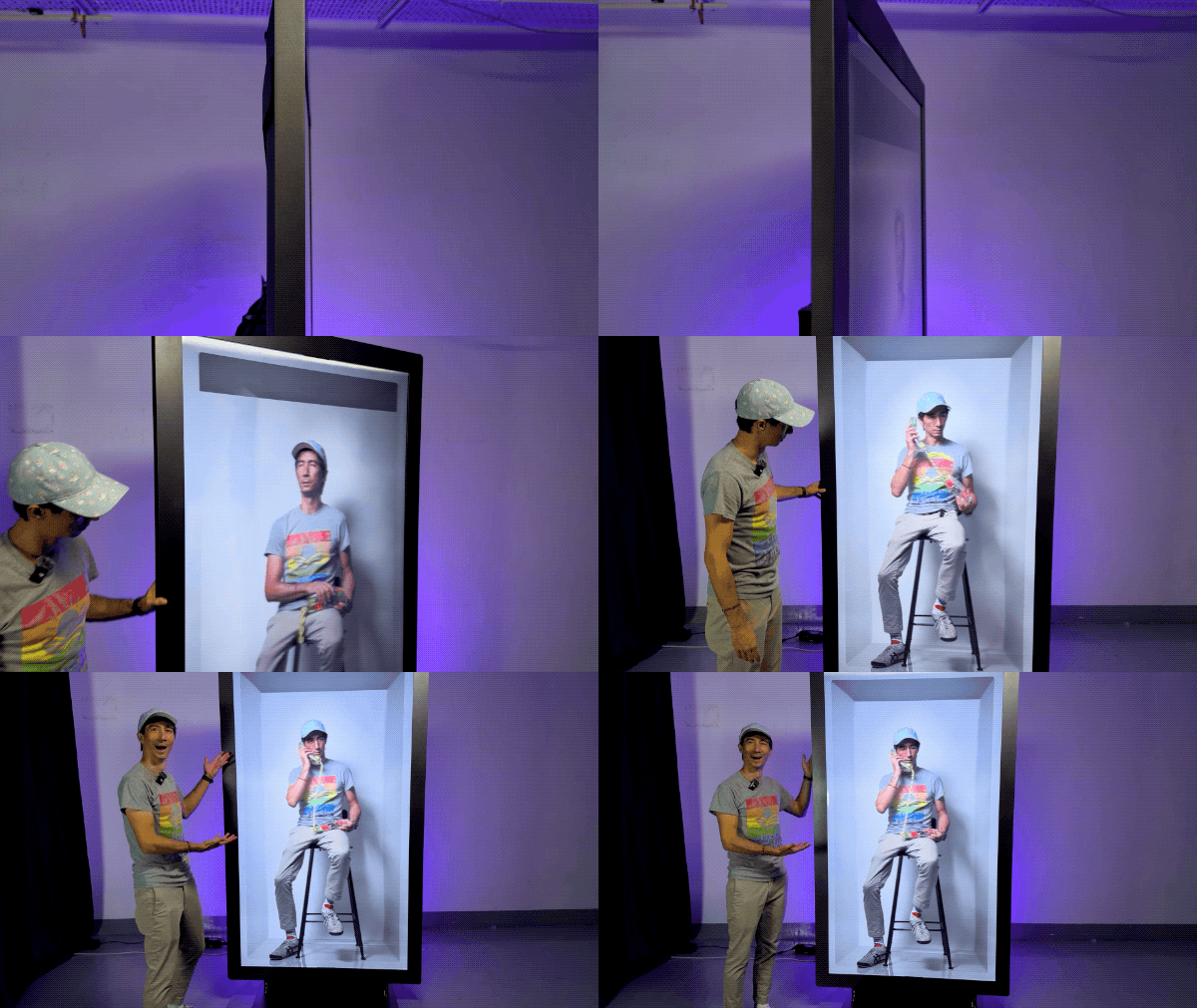
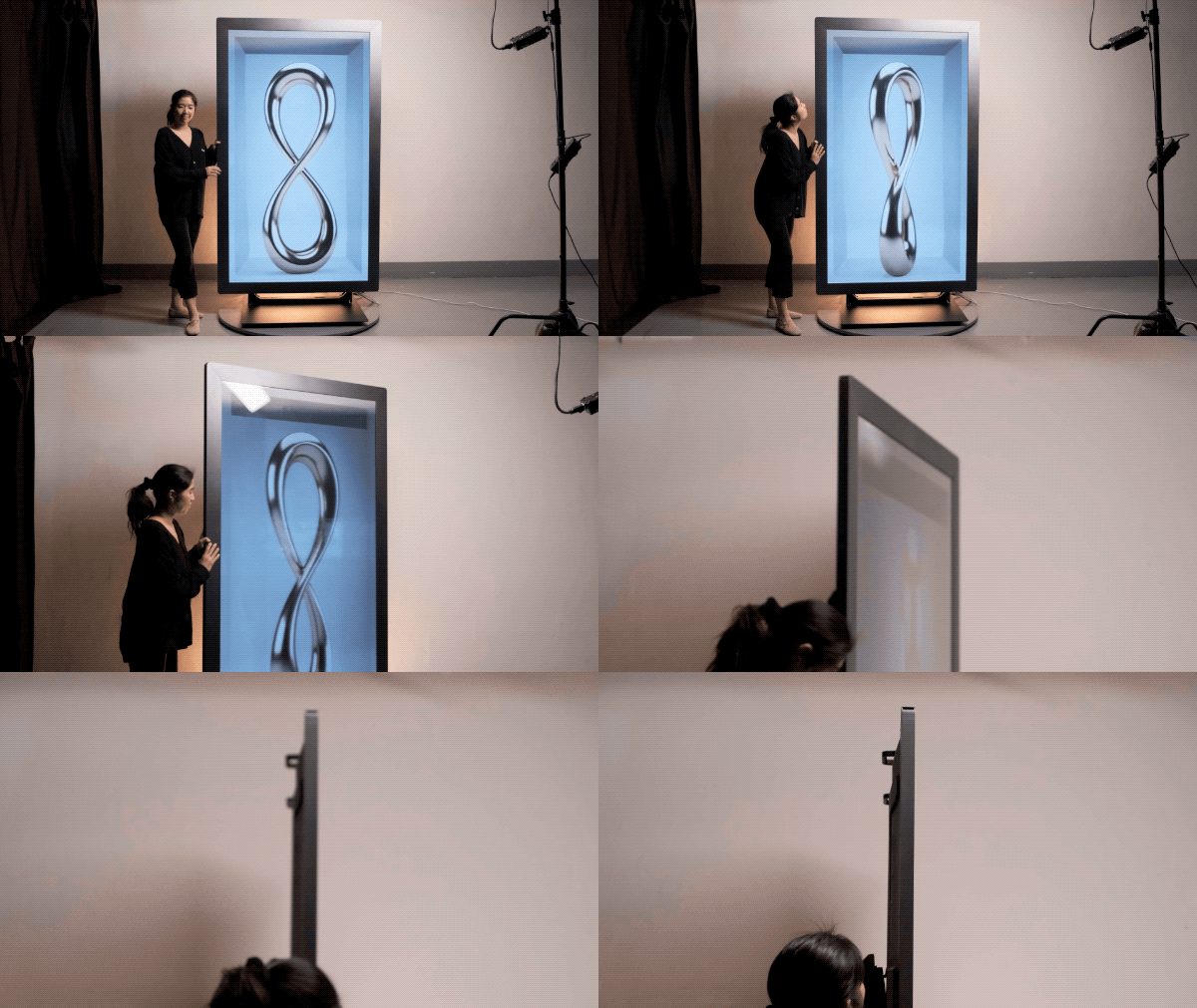
The 86" HLD is not just a panel. It’s a complete display system designed to support interactive and spatial experiences built on top of it.
Each unit includes:
- A patented 86" 4K Hololuminescent Display
- Integrated IR touchscreen hardware
- A 4K camera
- Microphone with echo cancellation
- Stereo speakers
Together, these components provide the hardware foundation required for experiences such as interactive interfaces, spatial storytelling, and real-time or pre-rendered content — depending on the software and systems used.
Built to Fit Existing Content Pipelines
The 86" HLD is designed to integrate into workflows creative teams already use.
Holographic content can be authored using tools like Adobe After Effects, Premiere Pro, Unity, Unreal Engine, Cinema 4D, and modern AI video tools such as Runway or Veo. Existing 3D assets, motion graphics, and video content can be adapted for spatial presentation without reinventing the entire pipeline.
This makes the display suitable for teams who want to experiment, prototype, and deploy holographic content using familiar production tools.
Holograms in Real-World Environments
What changes with the 86" HLD isn’t just visual quality — it’s where holographic displays can realistically be deployed.
Below are just a few examples of how teams can start exploring with the HLD:
Transport Hubs & Public Spaces
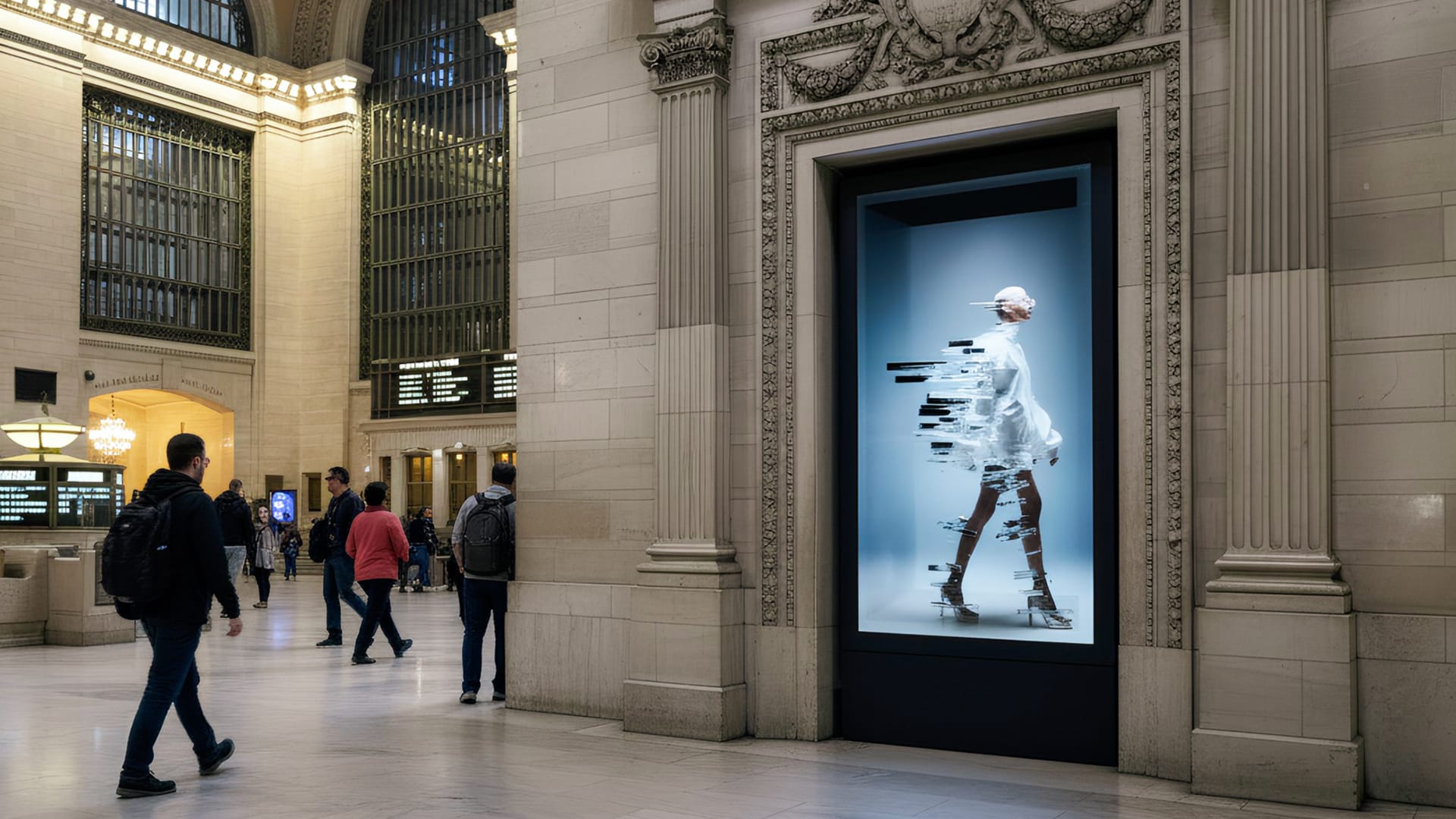
Where: Airports, train stations, metro concourses, ferry terminals, stadiums, large campuses.
The challenge today:
Wayfinding and information systems are often overcrowded or limited to static signage. Many holographic systems are too bulky for high-traffic areas, and staffing information desks at scale is expensive.
What the 86" HLD enables:
Because it mounts like a 2D display, the HLD can be installed in the same locations as traditional digital signage — columns, corridor entrances, or concourse walls.
Teams can use the display to build life-size, spatial information experiences, such as:
- Pre-rendered or live video content presented at human scale
- Interactive directories or informational interfaces
- Remote or scripted presentations when paired with custom software
The result is a high-visibility spatial surface that supports group viewing without headsets or personal devices.
Flagship Retail & Brand Environments
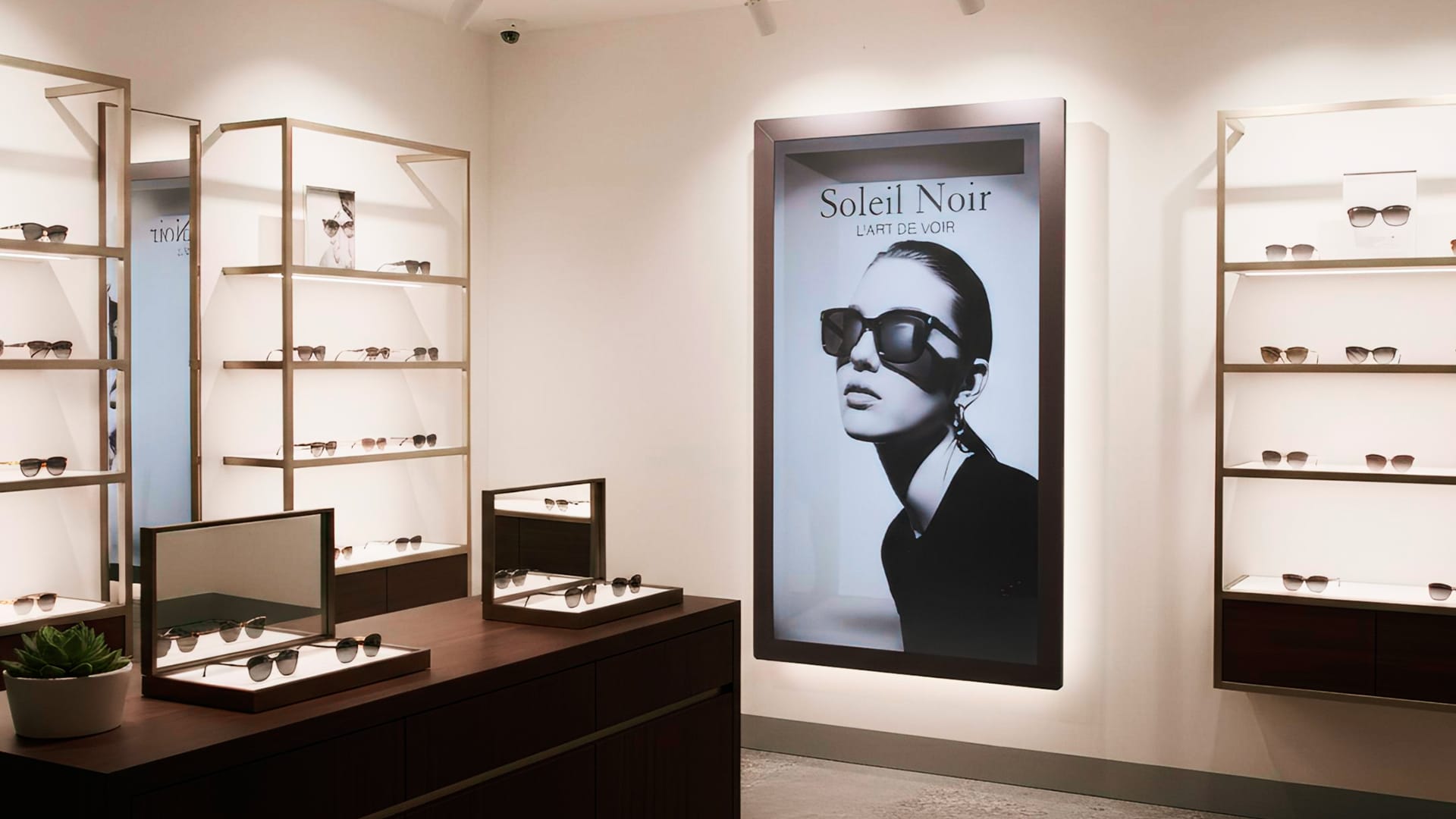
Where: Flagship stores, storefront windows, mall atriums, pop-ups.
The challenge today:
Retail spaces are saturated with flat screens. More volumetric systems often require floor space and behave like standalone installations rather than architectural elements.
What the 86" HLD unlocks:
Mounted flush to the wall or behind a storefront window, the HLD allows brands to present products as holographic visuals that appear to float in front of the display surface.
With appropriate content and software, teams can create experiences such as:
- Life-size or near-life-size product visualizations
- Animated product breakdowns or exploded views
- Interactive browsing experiences tied to touch input
Because there are no moving parts, content films cleanly and can be reused for social or OOH campaigns.
Museums, Galleries & Cultural Institutions
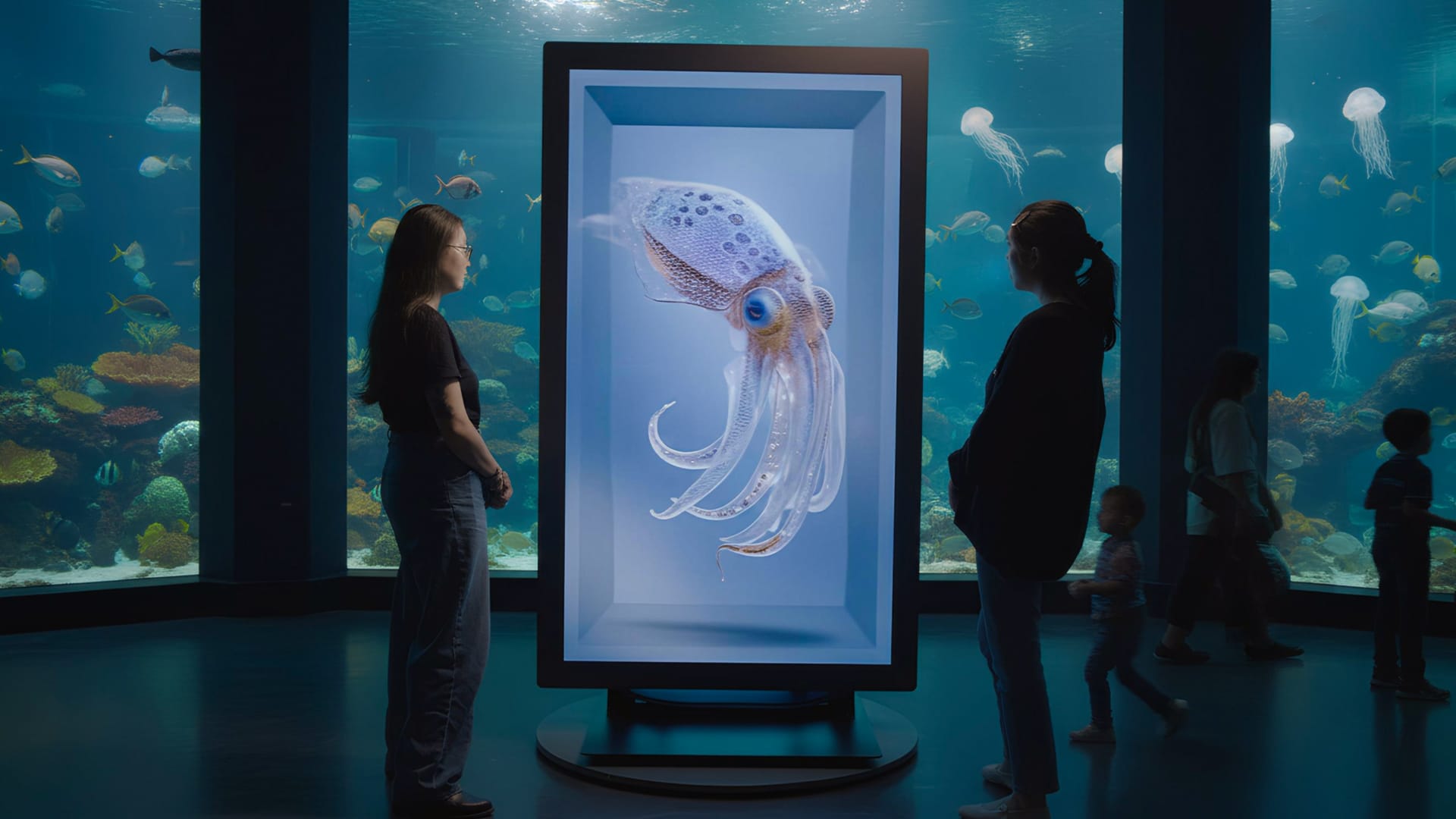
Where: Museums, science centers, historical exhibitions, cultural spaces.
The challenge today:
Institutions want to add depth and narrative without overpowering physical artifacts or building black-box environments.
How the 86" HLD fits in:
The thin, wall-mounted design allows the display to sit alongside objects and exhibits without introducing airflow, vibration, or large footprints.
Institutions can use the platform to support:
- Spatial storytelling and contextual explanations
- Pre-recorded or animated guides presented at human scale
- Modular content that can be reused across exhibitions or venues
The display becomes a layered storytelling surface — additive rather than dominant.
Corporate Lobbies & Experience Centers
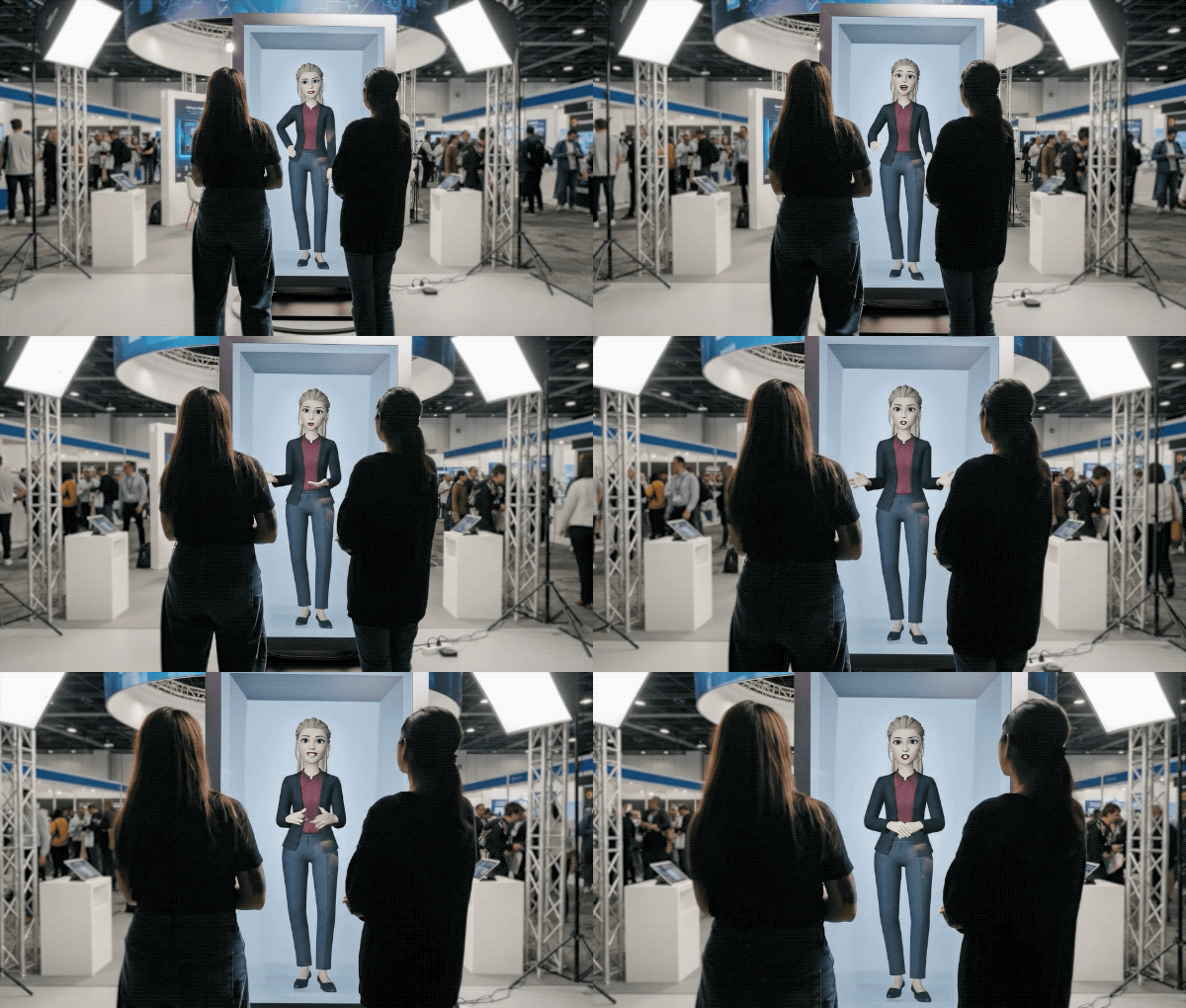
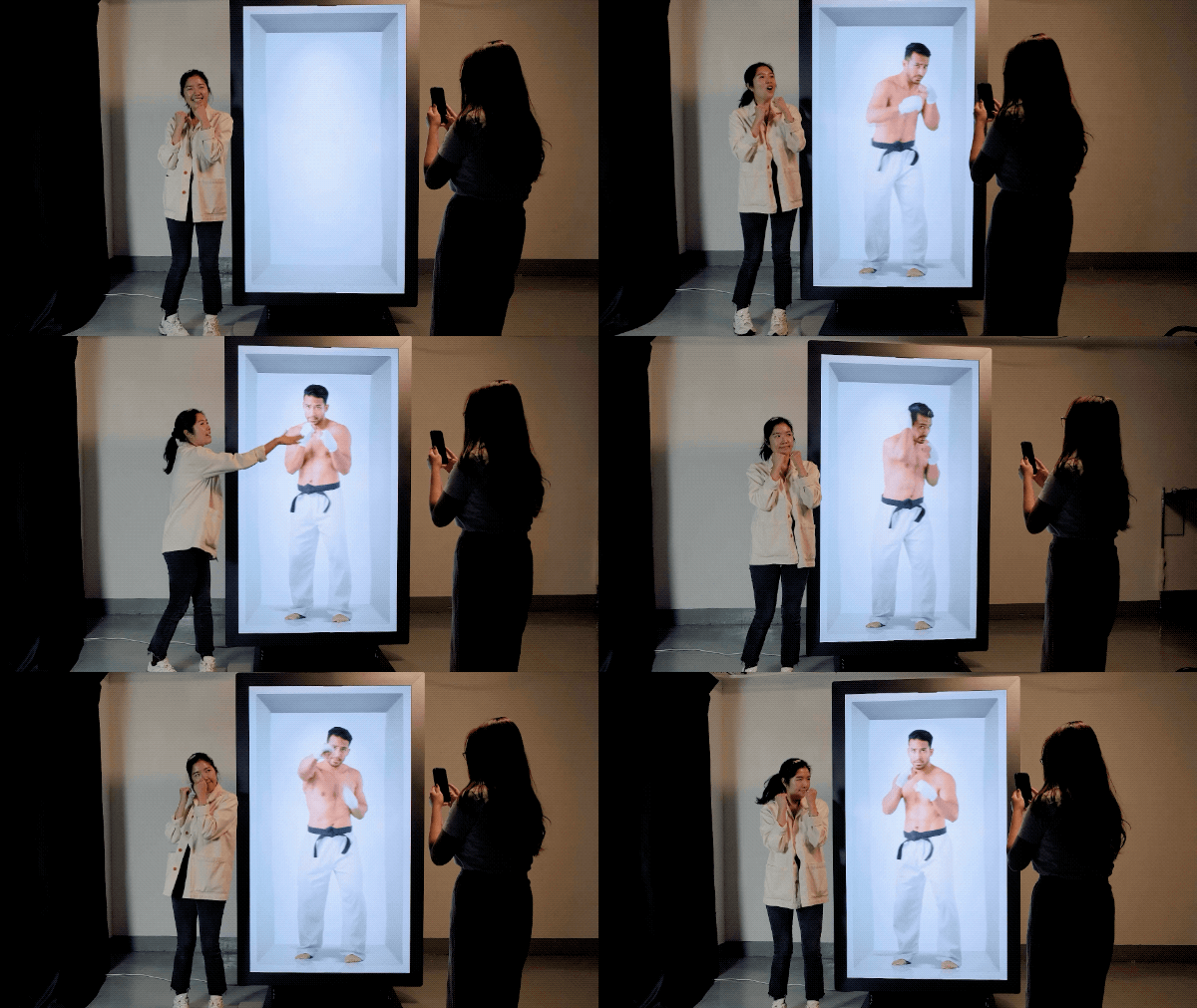
Where: Corporate HQs, briefing centers, executive showrooms.
The challenge today:
Most lobbies rely on looping brand videos that look polished but don’t meaningfully engage visitors.
What the 86" HLD enables:
Used as a spatial brand surface, the HLD can support experiences such as:
- Holographic welcome messages or presentations
- Interactive visualizations of complex products or systems
- Camera-friendly moments that translate well to marketing content
All content can be updated remotely using existing CMS infrastructure systems like BrightSign, allowing the display to evolve without much additional physical reconfiguration.
Live events, pop-ups & theme parks
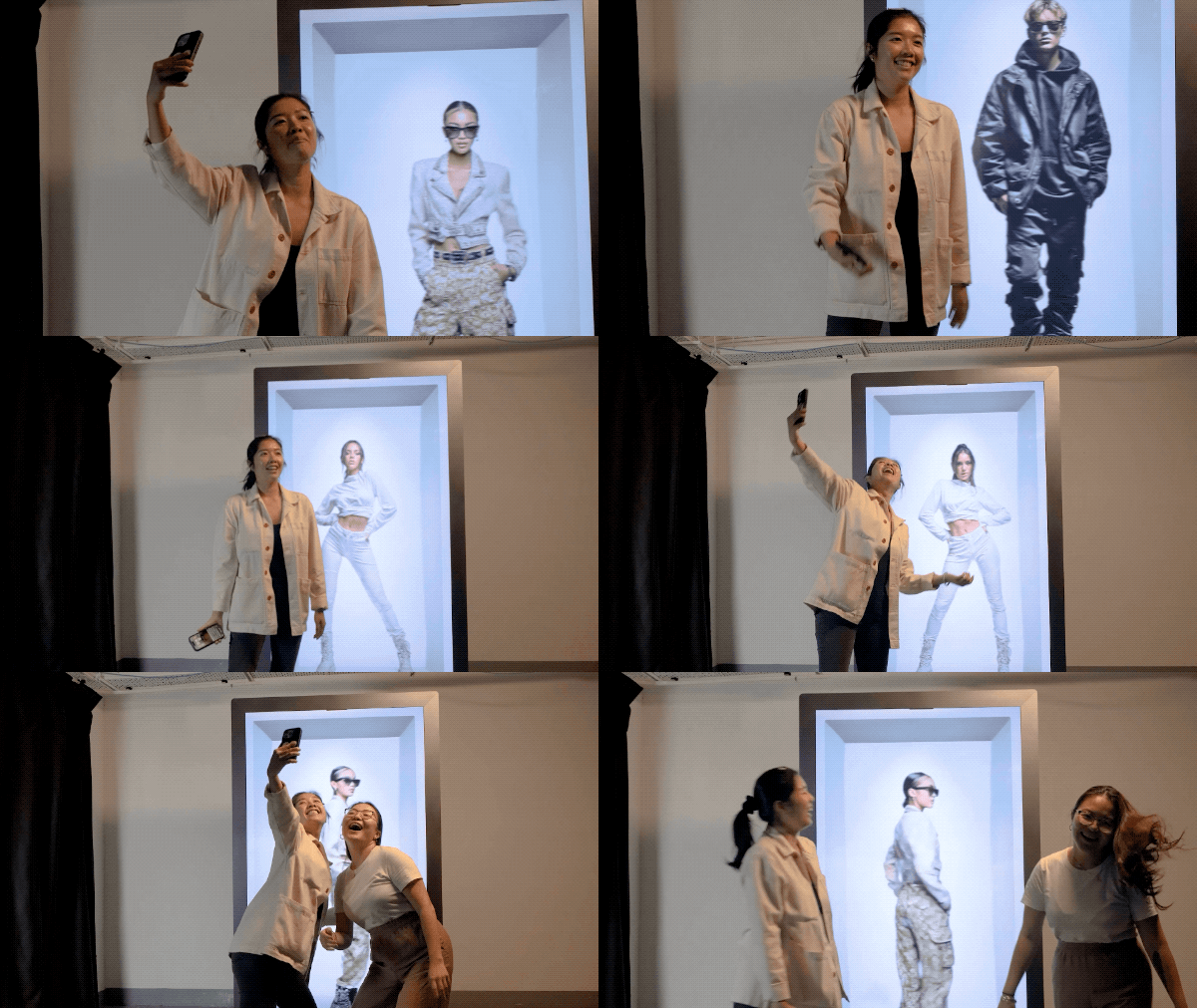
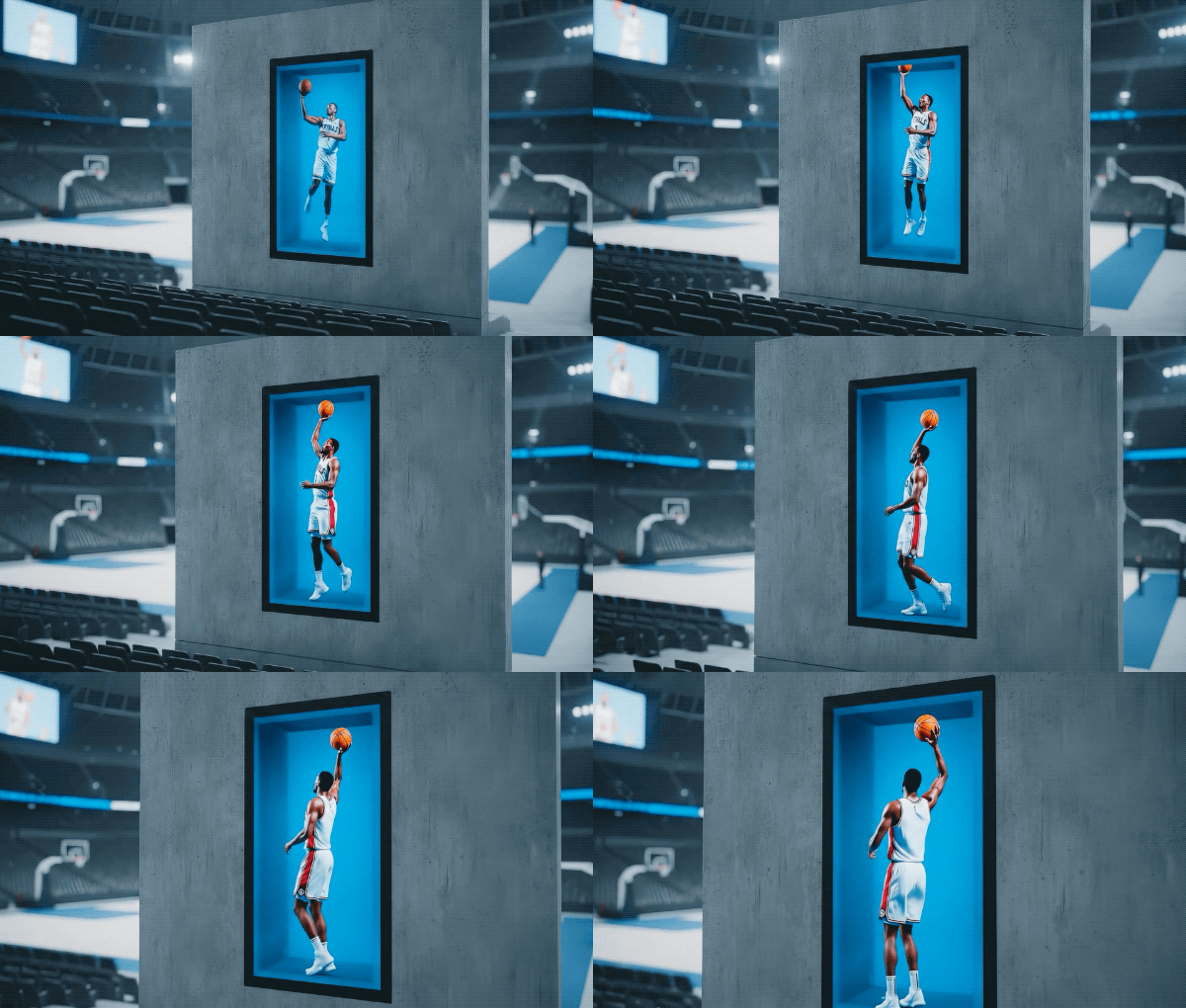
Where: Trade shows, festivals, fan conventions, themed attractions.
The challenge today:
Event teams need high-impact moments that don’t require cranes, heavy rigging, or permanent installations.
How the 86" HLD helps:
Compared to traditional hologram boxes, the HLD is dramatically thinner and lighter, making it easier to ship, install, and deploy.
With custom content, teams can design:
- Character-driven holographic moments
- Branded spatial installations
- Sponsor-friendly experiences that are easy to film and share
The display acts as a reusable anchor — premium in effect, practical in logistics.
Pre-Orders, Pricing & Early Access
Pre-orders for the 86" Hololuminescent Display open on December 16, 2025.
Here’s how the program works:
- Reservation fee: $3,000
- Pre-order price (total): $15,000, remainder $12,000 due 30 days before shipment (list price $20,000)
- Early adopter bonus: A complimentary 16" Hololuminescent Display for content development and testing (ships early January)
- 86" HLD shipping window: Spring 2026, with a super limited first production run
A New Kind of Display for Real-World Spaces
Looking Glass is based in Brooklyn, NY and Hong Kong, and we’ve spent years building displays that bring 3D content into the real world — from collaborative 3D visualization to deeply magical public moments.
The 86" Hololuminescent Display is our answer to a simple question:
What if life-size holograms were as easy to deploy as a standard digital sign?
If you’re designing retail experiences, digital signage networks, museums, corporate lobbies, transport hubs, or theme park environments, we’d love to talk about how the 86" HLD can fit into your next wave of projects.
To learn more or reserve a unit: Reach out to our team at sales@lookingglassfactory.com or visit our site for details on demos, deployment options, and technical requirements.