Breakthrough in Switchable Holographic Displays

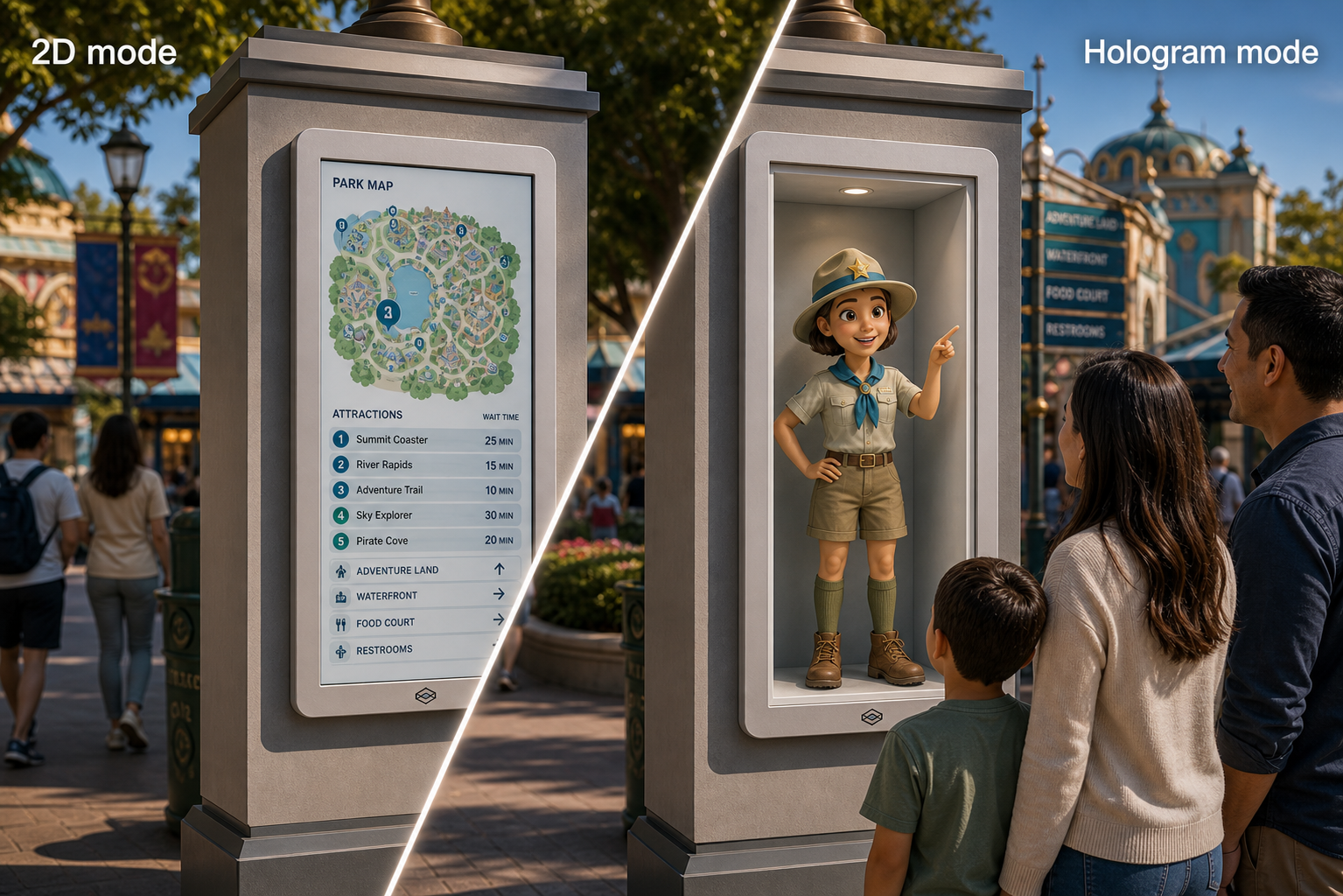
Behind-the-scenes #1
There is a “holy grail” invention or breakthrough in every industry that, if found, promises to unlock untold potential.
The industry Looking Glass operates in – the holographic display industry, part of the broader 3D display world spanning everything from light field displays to the Apple Vision Pro to theme park illusions like Pepper's Ghost – is no different. We have a holy grail too.
But ours isn't a vague dream - it is very specific. It has four requirements.
The first three are probably obvious if you've been following the Looking Glass journey for a while:
- No headgear: no one wants to wear a VR or AR headset if they don't have to.
- Group-viewable: it needs to work for families and friends gathered together, not just one person at a time.
- Cost-competitive: When manufactured at large scale (millions of units), it has to be just slightly more expensive than the 2D display alternatives.
But the fourth requirement is the one we don't talk about often, because it is so challenging.
- Perfect 2D resolution.
This means that the holographic display of the future – the holy grail – must be able to not only show 3D content, but also show 2D content with zero regression in resolution or framerate.
This is way harder than it sounds. That’s because all four requirements have to be fulfilled together, not just one or two*.
Now after years of R&D, I’m proud to share that we’re taking the first major step towards achieving the last piece of the puzzle. It's a 2D-to-3D switchable version of our award-winning Hololuminescent™ Display (last week it won the prestigious SID Display of the Year award), capable of switching electrically, with no moving parts, between a full-resolution, no-compromise 2D mode into a hologram mode, and back again. This is prototype today (patents granted and more pending), but this will eventually evolve into our second generation Hololuminescent Display (HLD) technology.
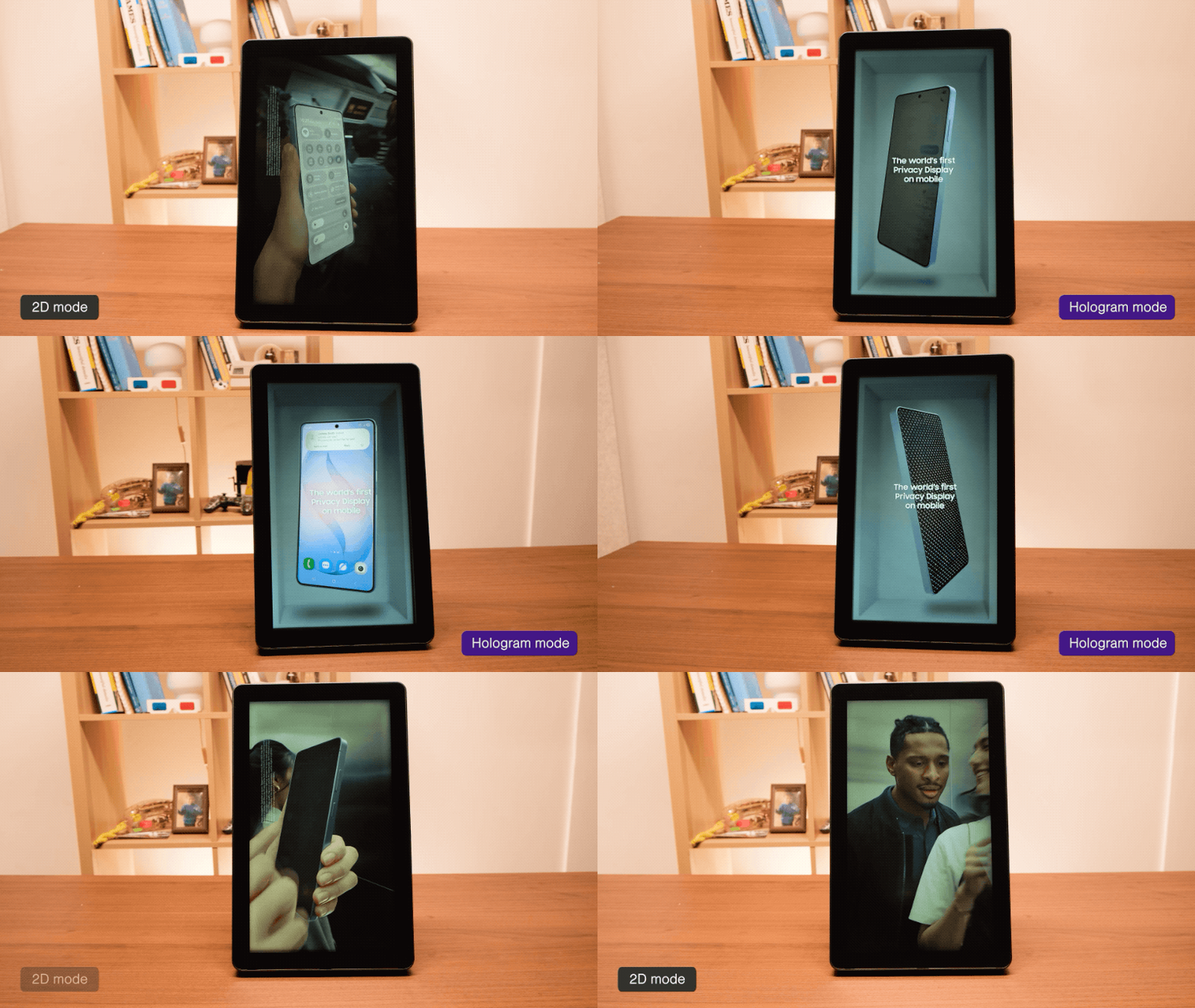

This gen2 switchable HLD technology is similar in many respects to our gen1 Hololuminescent Displays (which are shipping now)! It builds on the same decade+ of light field research and 30+ patents (granted and pending) behind Gen1 HLDs. But with one important difference. The Gen2 systems will be able to switch between a hologram mode, and a full-resolution 2D mode.
I won't walk through the optical architecture here in detail, but the result is all four requirements of the “holy grail” of our industry are finally within reach, which means that soon the display showing a document at 9am can, a moment later, become a hologram of an AI agent you’re talking to or a spatial photograph, and back again seamlessly.
This breakthrough will take holograms from specialty display to every display.
Take a look at just some of the possibilities below:
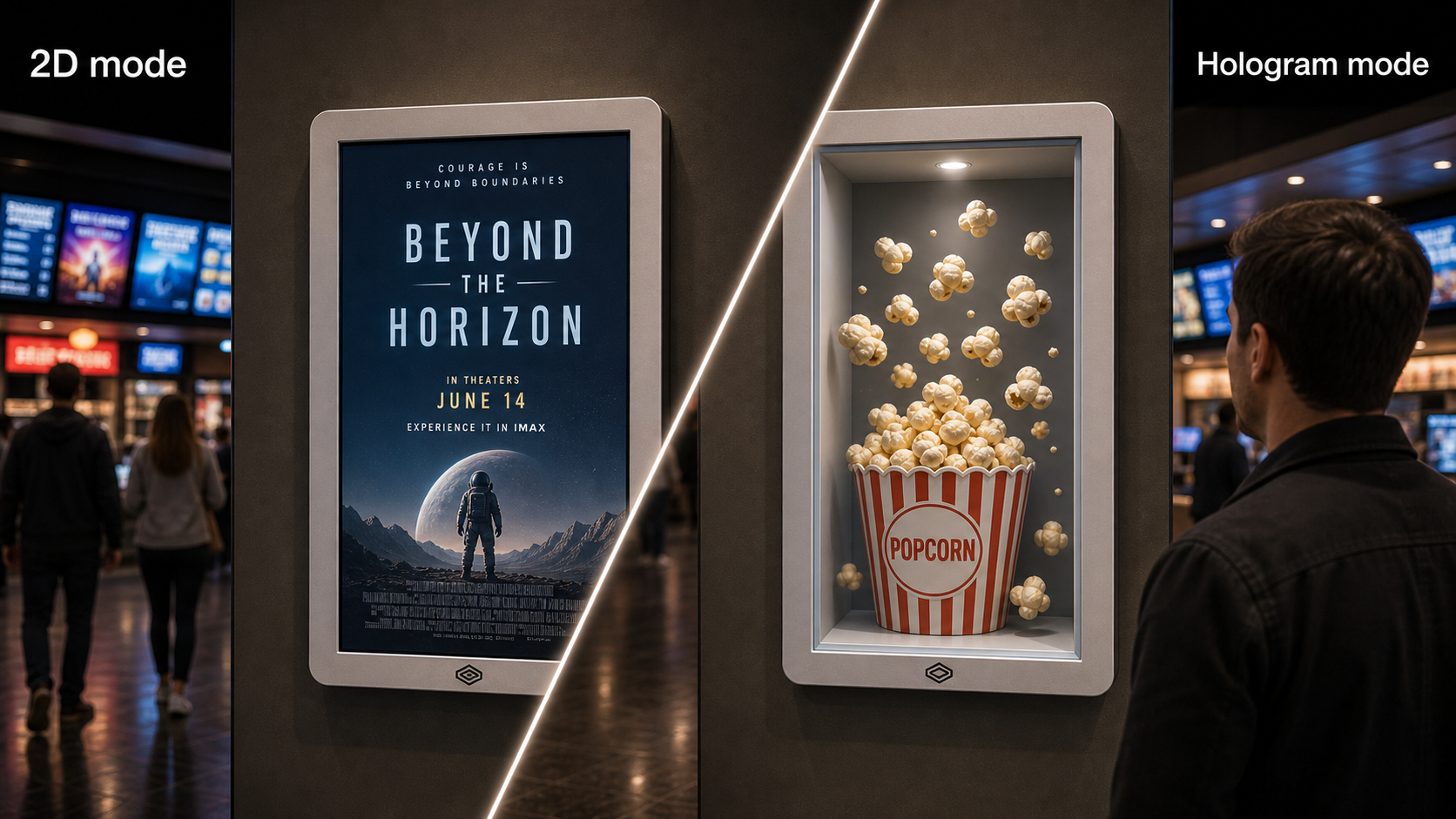
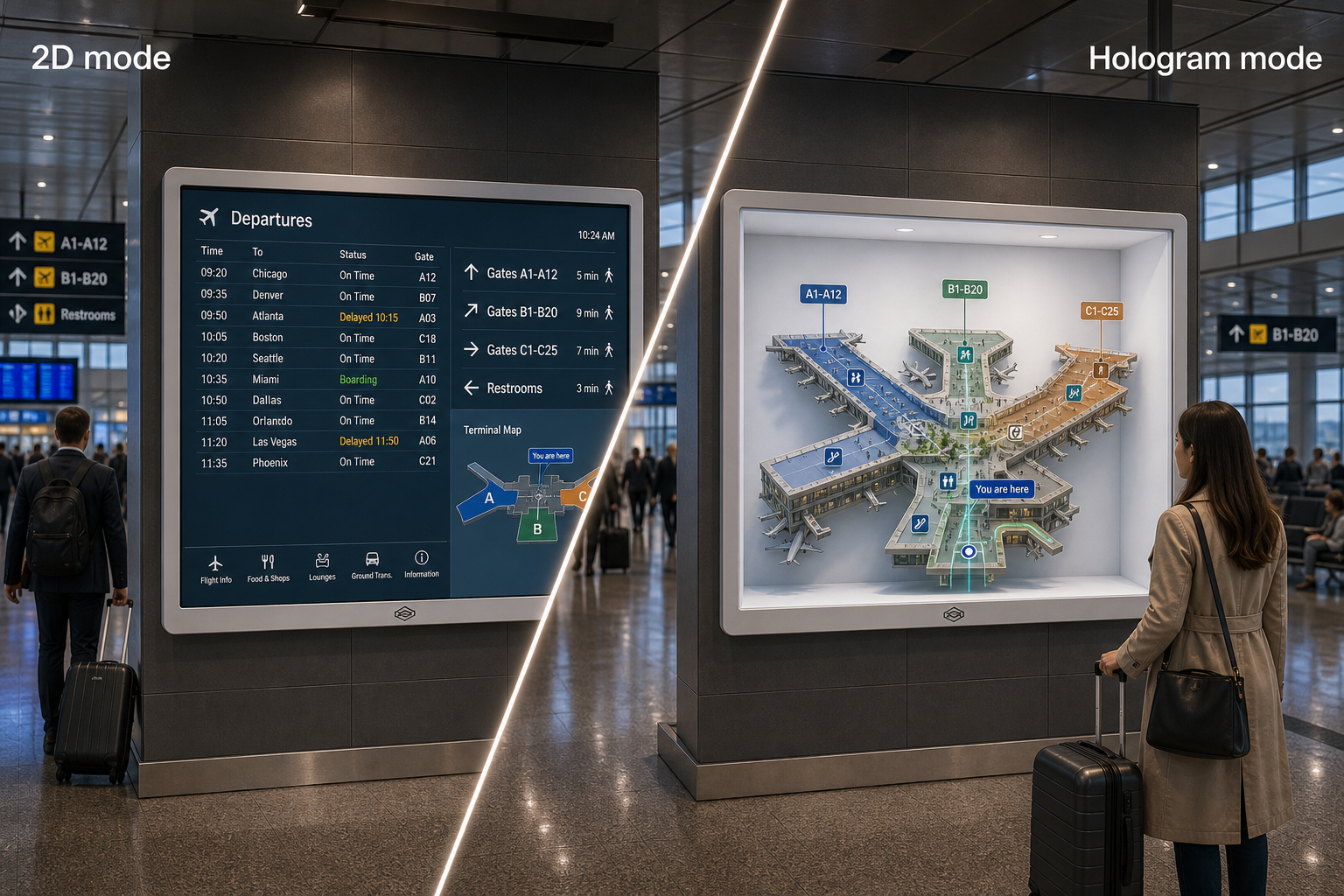
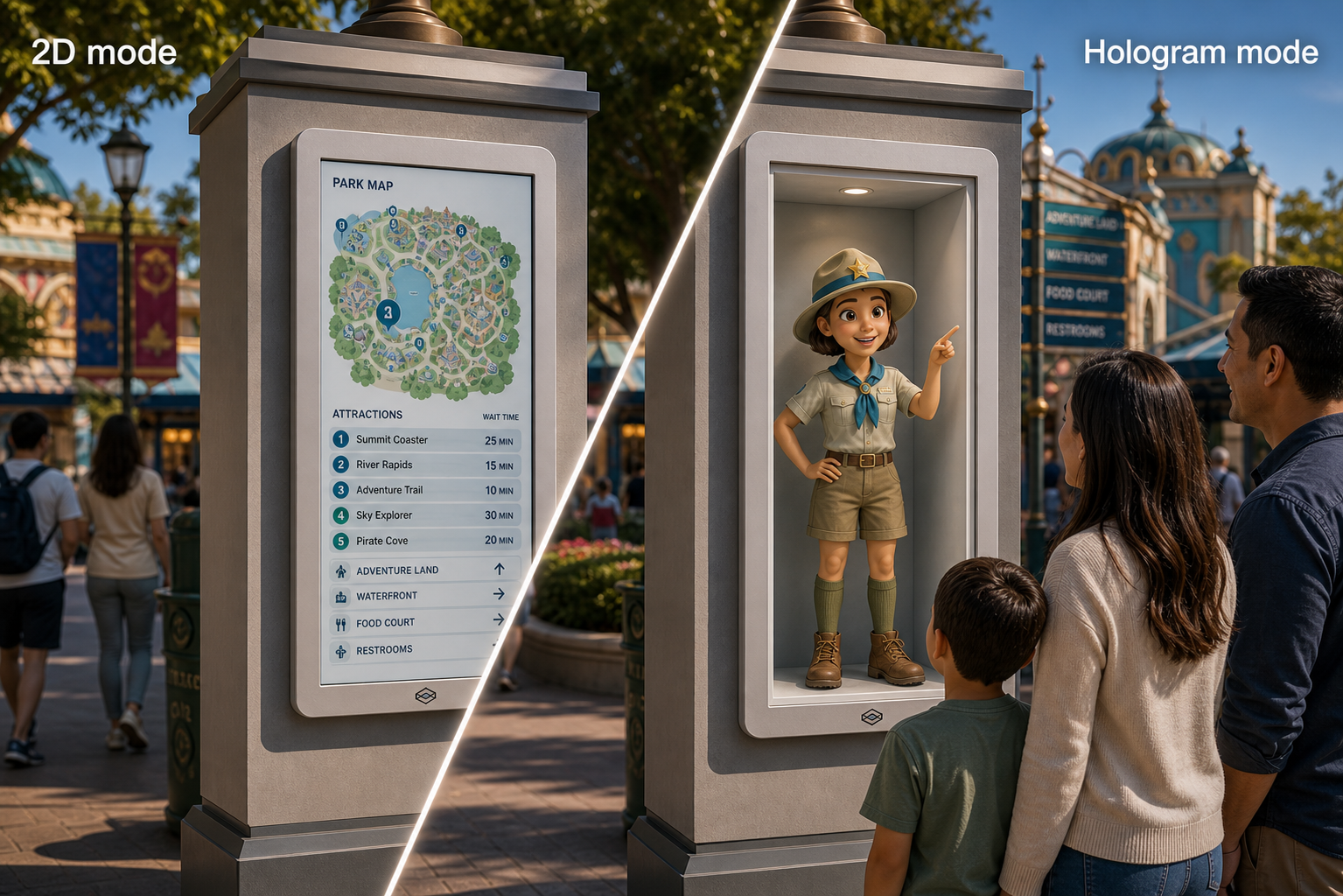
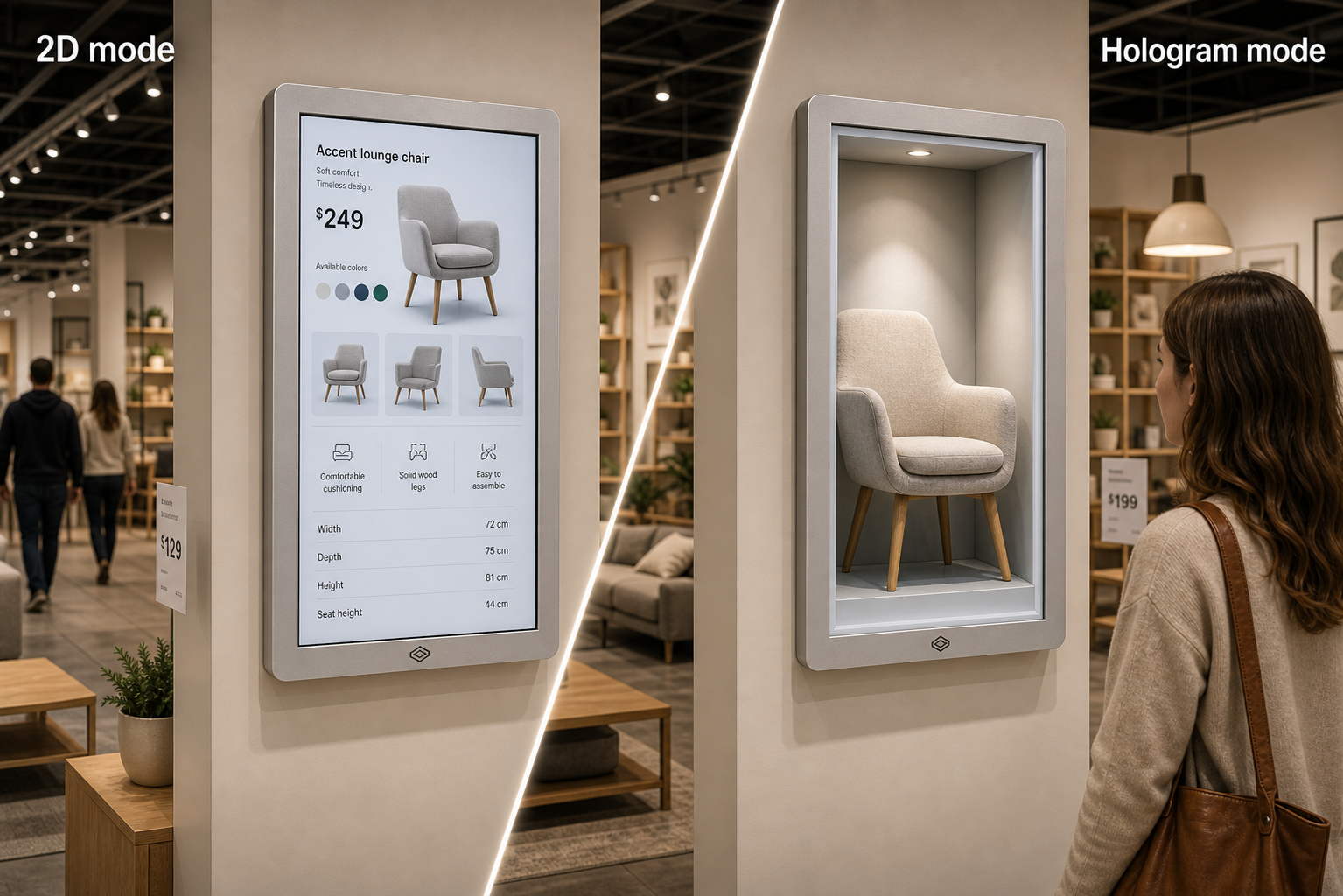
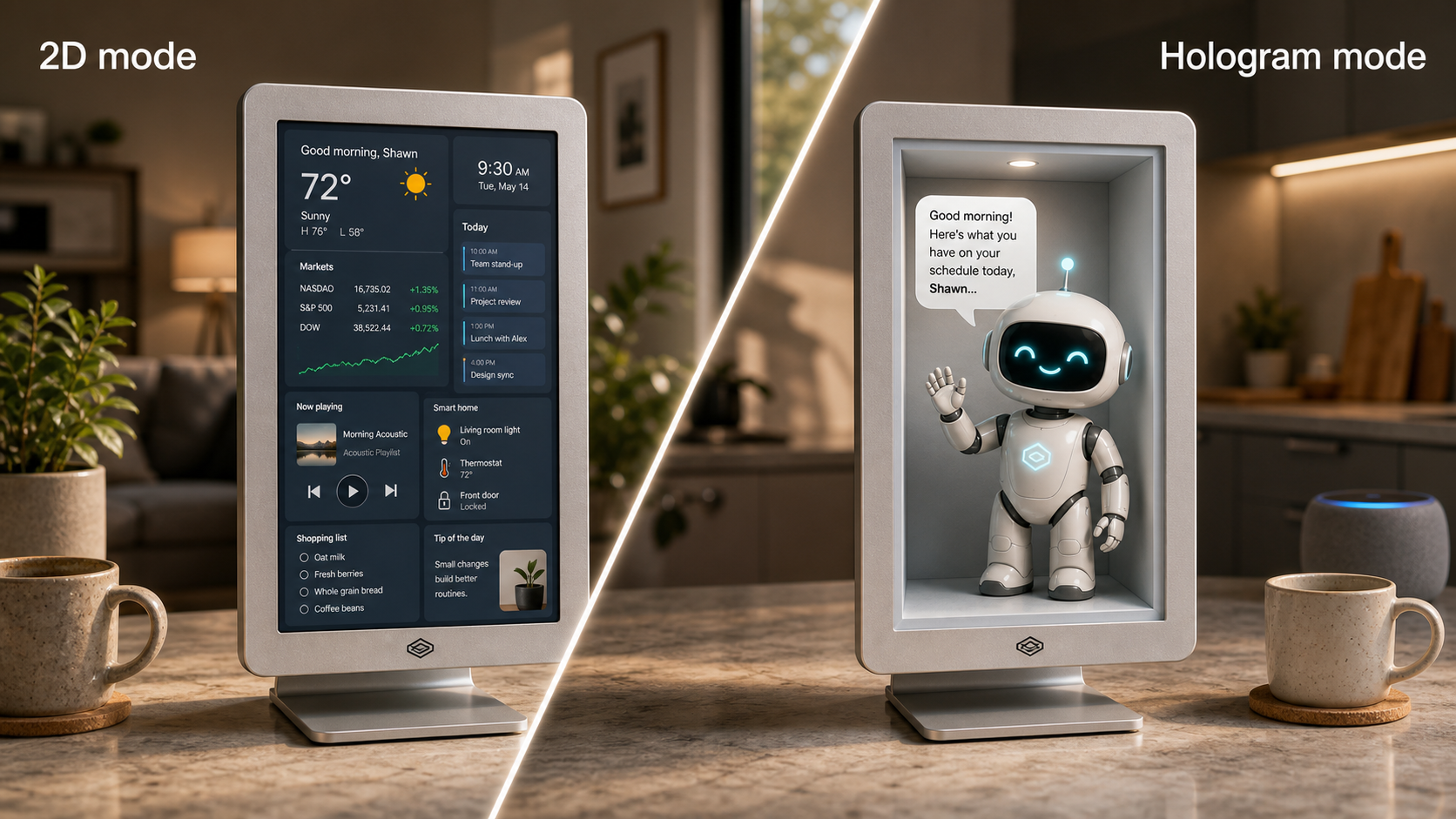
While what we’re showing today is a prototype, this is much more than a one-off lab experiment. That’s because perhaps the biggest magic trick of the gen2 switchable HLDs are how they are made. They can be manufactured with roll-to-roll processes, built into standard LCD panels on existing LCD production lines without any retooling costs. This means at mass-scale of millions of units, the switchable HLD technology will approach the costs of regular displays.
Seeing it for the first time in Paris, this week (June 17 - June 21, 2026)
As a rule, we never share behind-the-scenes looks at our next-gen technical developments like this. But this breakthrough has so much insane potential, we’re breaking that rule today, so that we can start to work with partners on bringing this gen2 HLD tech into their products as rapidly as possible.
This week in Paris at Vivatech, in partnership with the world’s largest out-of-home digital signage company JCDecaux, we're showing the first public prototype of the 2D-to-3D switchable HLD. If you're anywhere near that part of the world, write us at sales [at] lookingglassfactory.com so we can give you a demo in person.
And if you build displays, devices, or experiences – monitors, signage, smart home devices, cars of the future, really anything with a screen – and "every display, holographic" is interesting to you, we want to talk. Reach me at smf [at] lookingglassfactory.com.
To the future, always.
-Shawn
*If you’re a true 3D nerd, you know there are single-viewer gaming laptops that use a switchable lenticular technology. That works pretty well for one person at a time, but can’t work for more than one person. That’s because the innate optical stack used in switchable lenticular can’t get to beyond 10-15 degrees viewing cone fundamentally – the light just can’t bend more than that in the optical stack. This is part of the reason there hasn’t been any commercially-viable, mass-producible, group-viewable, 2D-to-3D switchable displays. Until now of course.